Caring for Patients with Multiple Chemical Sensitivity (MCS)
Practical, evidence-informed guidance to support safer, more inclusive clinical care.
For patients living with Multiple Chemical Sensitivity (MCS), environmental exposures can create significant barriers to receiving it.
Everyone deserves access to healthcare.
Accessible Canada Act · 2019
Are You 2040 Ready?
Canada’s barrier-free deadline applies to all federally regulated sectors — including healthcare. Over 1.13 million Canadians live with MCS. The time to act is now.
Healthcare institutions receiving federal funding must meet accessibility requirements — including environmental accommodations for patients with MCS.
WHY THIS MATTERS
Why Supporting Patients with MCS Matters in Healthcare Settings is Important
Multiple Chemical Sensitivity (MCS) is a chronic condition in which individuals experience symptoms triggered by low levels of environmental chemicals including at low levels.
Common triggers include volatile organic compounds (9VOCs) and other chemicals found in:

Fragrances and scented products
Cleaning agents and disinfectants

Air fresheners

Building materials
For some patients, healthcare environments themselves may provoke symptoms. This can contribute to delayed care, avoidance of medical visits, and worsening health outcomes.
Healthcare professionals play an essential role in recognizing multiple chemical sensitivity and supporting safer care environments.
UNDERSTANDING VOCs IN CLINICAL SETTINGS
What Are VOCs?
Volatile Organic Compounds (VOCs) are chemicals that easily evaporate into the air from common products such as cleaning agents, paints, disinfectants, fragrances, and building materials.
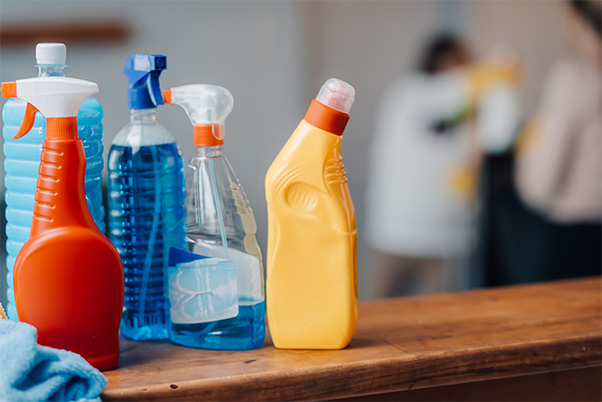
In healthcare environments, VOC exposure may occur from:
- Disinfectants and sterilizing agents
- Cleaning sprays
- Hand sanitizers
- Renovation materials
- Baby care products
VOC Reference Table
The table below outlines common VOC sources found in indoor environments in office spaces. It is provided to support environmental awareness in clinical settings and is not intended as a diagnostic tool.
| Trigger Category | Common Sources | Example Chemical Compounds | Potential Patient Impact |
|---|---|---|---|
| Fragrances & Scented Products | Perfume, deodorant, scented lotions, laundry detergents | Limonene (C10H16), Linalool (C10H18O), Benzyl Alcohol (C7H8O) | Headaches, dizziness, respiratory irritation, neurological symptoms |
| Cleaning Agents & Disinfectants | Bleach, ammonia cleaners, surface disinfectants | Sodium Hypochlorite (NaOCl), Ammonia (NH3), Quaternary Ammonium Compounds | Shortness of breath, throat irritation, eye irritation |
| Air Fresheners | Plug-ins, diffusers, aerosol sprays | Formaldehyde (CH2O), Phthalates, Ethanol (C2H6O) | Exacerbation of asthma, fatigue, nausea |
| Building Materials | Paint, adhesives, sealants, flooring | Toluene (C7H8), Xylene (C8H10), Formaldehyde (CH2O) | Chronic irritation, cognitive symptoms, skin reactions |
| Volatile Organic Compounds (VOCs) | Solvents, fuels, industrial emissions | Benzene (C6H6), Acetaldehyde (C2H4O), Styrene (C8H8) | Systemic symptoms, neurological effects, respiratory distress |
| Personal Care Products | Hair spray, cosmetics, shaving products | Propylene Glycol (C3H8O2), Parabens, Synthetic Fragrance Blends | Skin irritation, headaches, inflammatory response |
Evidence for Action
Why Scent-Free Policies Work
Research shows scent-free policies significantly reduce indoor chemical exposure.
TVOCs by Office Space
Average concentration μg/m³ (24hrs)
in scent-free spaces
Health Canada's Listed Hazardous VOCs by Office Space
Concentration μg/m³ (24hrs) — With Policy vs. No Policy
Includes EDCs, teratogens, and carcinogens — compounds that exacerbate asthma and COPD symptoms.
Sources: EPA; IARC; Health Canada 2024; Molot et al., 2023; Zaniboni & Toftum, 2023; Lv et al., 2023
The evidence is clear — scent-free policies reduce harmful chemical exposure.
A brief environmental screening can significantly improve patient access and safety.
Simple Screening Questions for Providers

A brief environmental screening can significantly improve patient access and safety.
Consider asking:
- Do you experience symptoms when exposed to fragrances, cleaning products, or other chemical or scented products?
- Are there specific environments where your symptoms worsen?
- Are there particular exposures we should be aware of to help make this visit safer for you?
- Do cleaning products or chemicals trigger reactions?
- Are there accommodations that would help you access care safely?
Our clinic follows a fragrance-free and lowest-emission approach. We focus on source control — choosing fragrance-free and lowest-emission products — rather than relying on ventilation after chemicals are released.
Would these measures address your main concerns, or are there additional precautions that would support your access to care?
A simple question, combined with fragrance-free and lowest-emission practices, can prevent avoidable exposures and reduce barriers to care.
Practical guidance for safer, fragrance-aware care
Step-by-step provider approach
Screen for environmental triggers during intake. Ask about reactions to fragrances, cleaning products, and other chemical exposures.
Clearly record MCS in the patient file.
Prevent exposures at the source by eliminating scented products, avoiding spraying in patient areas, and choosing fragrance-free, lowest-emission alternatives rather than relying on ventilation after release.
Adjust scheduling, room preparation, or care delivery when feasible.
Assess symptom impact after the visit and note effective exposure-reduction measures to support safer future care.
Role-specific guidance for healthcare teams
Different healthcare roles interact with patients in different ways. The guidance below provides practical considerations tailored to specific care settings.
Nurses are often the first point of contact and play a central role in identifying MCS.
Screen
• Ask about fragrance and chemical triggers during intake
• Identify common environmental exposures
Document
• Clearly record MCS in the patient file
• Flag environmental needs
Reduce Exposure
• Eliminate scented personal products
• Avoid aerosolized sprays in patient areas, and choose only fragrance-free, lowest-emission alternatives • Use non-latex, least-toxic supplies
• Ensure ventilation after cleaning
Communicate
• Inform colleagues of MCS during handoff
• Validate and acknowledge patient-reported reactions
Emergency responders may encounter patients experiencing acute reactions to environmental exposures (perfume, first, second, or third-hand smoke).
Recognize
• Consider environmental triggers when symptoms follow exposure
Reduce Immediate Exposure
• Move the patient away from triggering substances
• Avoid spraying products in enclosed spaces
Ask
• Inquire about known triggers
• Ask what has helped previously
Document
• Record MCS and symptoms clearly
• Communicate environmental needs during transfer of care
Physicians play a critical role in validating patient experiences and coordinating care.
Screen
• Incorporate environmental health questions into the assessment
Assess Impact
• Document functional limitations
• Note symptom patterns – these may change as condition progresses
Coordinate
• Inform care teams of MCS
• Consider environmental exposures when planning care
Support Accommodations
• Provide clear clinical documentation outlining diagnosis (where appropriate), and medically necessary environmental or source-control measures
• Support workplace or disability accommodation processes
Procedural environments may involve disinfectants, sterilizing agents, and materials that can trigger symptoms.
Pre-Procedure
Screen for MCS and document known triggers
Remove or substitute triggering disinfectants, sterilants, or materials before the procedure
Prepare the Environment
• Eliminate fragranced products in the procedural area and adjacent corridors • Do not use aerosolized or triggering chemical products in or near areas the patient will access, including hallways and preparation spaces
• Complete necessary cleaning well in advance of patient arrival using fragrance-free, low-emission products • Use non-latex supplies when indicated
Post-Procedure
• Transfer documented triggers and required precautions to recovery staff • Monitor for symptom exacerbation and reassess the environment if symptoms occur
Emergency departments can present heightened exposure risks due to crowding, frequent cleaning, disinfectants, fragranced products, and limited environmental control. For patients living with MCS, these exposures may trigger significant symptom escalation.
Environmental exposure control in emergency care should be treated as a patient safety and accessibility consideration.
Key Principles
- Screen for MCS and clearly flag environmental triggers at triage
- Relocate patients to the lowest-exposure space available and avoid hallway placement
- Provide private room access at no additional cost when needed for accessibility
- Do not spray or apply chemical products near patient areas
- Use fragrance-free bedding and lowest-emission equipment
- Post fragrance-free signage and limit room entry during acute symptom periods
- Document and reassess environmental factors if symptoms escalate
Proactive environmental control reduces preventable harm and supports equitable access to emergency care.
Creating Safer Clinical Environments
Source control can significantly reduce exposure risks.
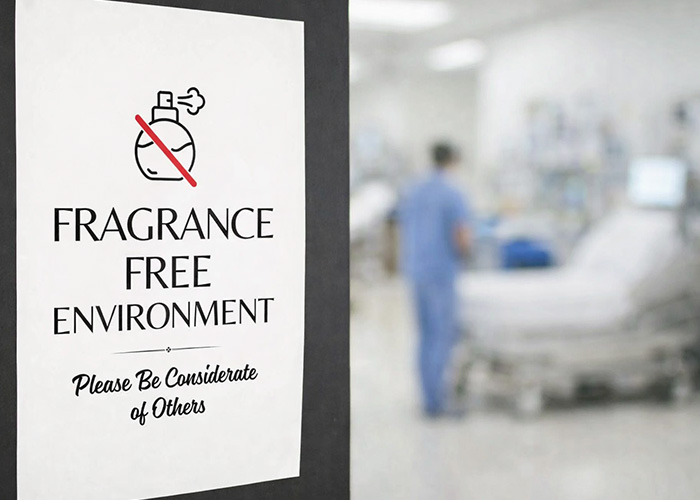
Fragrance-Free Practices
- Eliminate scented personal products
- Remove plug-in air fresheners
- Post fragrance-aware signage - download here

Cleaning and Disinfection
- Use fragrance-free, lowest VOC emission and least-toxic products compatible with infection prevention standards
- Do not use aerosolized or spray-applied products in areas the patient will access
- Complete cleaning well in advance of patient arrival and ensure products have fully dried and off-gassed before occupancy

Communication
- Inform patients in advance about cleaning practices
- Ask about accommodation needs prior to appointments
- Validate and document reported MCS-related symptoms
Healthcare Professionals Living With MCS
Healthcare professionals may also experience MCS. Clinical environments can present challenges related to fragrances, cleaning products, disinfectants, and building materials.
Creating safer environments supports both patient care and workforce inclusion.
If You Are a Healthcare Worker with MCS
You may consider:
Documenting Your Needs
- Keep records of triggers and symptom patterns
- Obtain medical documentation outlining functional limitations and required exposure-reduction measures
Requesting Accommodation
- Inform your supervisor or department lead of your need for workplace accommodation
- Provide medical documentation, if requested, outlining required source-control measures
- Request specific environmental adjustments (e.g., fragrance-free policy enforcement, lowest-emission products, modified cleaning practices, workstation adjustments)
Collaborating on Safer Policies
- Advocate for fragrance-free and lowest-emission practices
- Support procurement and use of fragrance-free, lowest-VOC-emission, and least-toxic products compatible with infection prevention standards
- Promote education within teams about chemical exposures, source control, and inclusive clinical environments
Patient Safety Tools
Individuals with MCS may carry:
- A Medic Alert bracelet indicating multiple chemical sensitivity (MCS)
- A written accommodation card outlining triggers and required precautions
- Requests for fragrance-free, lowest-emission, least-toxic, or non-latex care
- A personal low-exposure kit (e.g., mask, fragrance-free supplies)
Respecting and reviewing these tools supports patient-centred care.
Clinical Considerations and Research
MCS may involve multi-system symptoms and complex diagnostic considerations. Research continues to explore neurological, immunological, and environmental mechanisms.
Providers may encounter:
- Overlapping symptom patterns
- Diagnostic uncertainty
- Disability and accommodation considerations
Understanding environmental health factors supports more comprehensive and inclusive care.
Education & Professional Training
Limited recognition of MCS in clinical practice is often linked to gaps in medical education and continuing professional development.
Medical Students & Trainees
Integrating MCS into undergraduate and postgraduate curricula can improve diagnostic accuracy, reduce misattribution of symptoms, and strengthen patient trust.
Training should include:
- Clinical presentation and functional impact of MCS
- The role of chemical exposures in symptom exacerbation
- Source-control approaches in healthcare settings
- Ensure clinical communication reflects objective assessment of reported environmental exposures and supports patient safety
Practicing Physicians & Healthcare Providers
Continuing professional development should include:
- Updates on emerging environmental health research
- Clinical approaches to documentation and accommodation
- Implementation of fragrance-free and lowest-emission practices
- Recognition of access-to-care barriers experienced by patients with MCS
Education is a foundational step toward reducing healthcare inequities and improving inclusive clinical environments.
Access to Care
Access to health care is essential.
Patients living with MCS may delay or avoid medical care due to exposure risks, limited recognition of the condition, and barriers within clinical environments. Inclusive fragrance-free and lowest-emission healthcare settings reduce preventable barriers and support health equity.
Even small environmental adjustments can significantly improve patient safety, dignity, and access to care.
National data (CCHS 2015–2016) show that Canadians living with MCS are three times more likely to report poor health and face significantly higher barriers to care, including service unavailability, high costs, lack of a regular provider, and transportation challenges. They are also more likely to require specialist diagnosis yet experience greater difficulty accessing specialist services. Higher levels of pain and sleep disruption further compound health inequities.
Provider toolkit
Tools & Resources for Healthcare Providers
Clinical guides, screening tools, policy templates, and patient resources. Everything you need to support patients with MCS.
Video Resources
Understanding & Managing MCS
Educational videos for healthcare providers and patients — from diagnostic criteria to daily management strategies.
Diagnostic Consensus Criteria for Multiple Chemical Sensitivity (MCS)
The six consensus diagnostic criteria validated by the Environmental Health Research unit at the University of Toronto.
What To Do When You First Experience Multiple Chemical Sensitivity (MCS)
Tips for Best Management of MCS
A comprehensive guide to managing MCS — from reducing exposure triggers to housekeeping tips and strategies for healthier daily living.
Legal Rights Across Canada
Legal Rights Across Canada
MCS is a recognized disability in every Canadian jurisdiction. Access province-specific legal information.